Bird guide · Zosterops japonicus
Warbling White-eye
What the warbling white-eye eats, where it lives, when it comes to feeders and how to recognise it – with sightings from every US state.
- Season
- Year-round resident
- Size
- 4.3 in (10.5 cm)
- Eats
- nectar, fruit
- Feeds
- nectar feeder, tray/platform
- Most common
- Hawaii, California
Food
What do warbling white-eyes eat?
At feeders, warbling white-eyes take nectar, fruit.
Feeds acrobatically on fruit and nectar.
Feeder that suits it
A hummingbird nectar feeder with one part sugar to four parts water.
Range
Where do warbling white-eyes live?
Native to East Asia; introduced to Hawaii, where it now occurs on every island. By share of all bird sightings, warbling white-eyes are most common in Hawaii (5.2%).
Season
Does the warbling white-eye migrate?
Year-round resident. Across the US it is reported in every month; its share of bird sightings is highest in December.
Share of all bird sightings in the US that are warbling white-eyes, by month.
Identification
How to identify the warbling white-eye
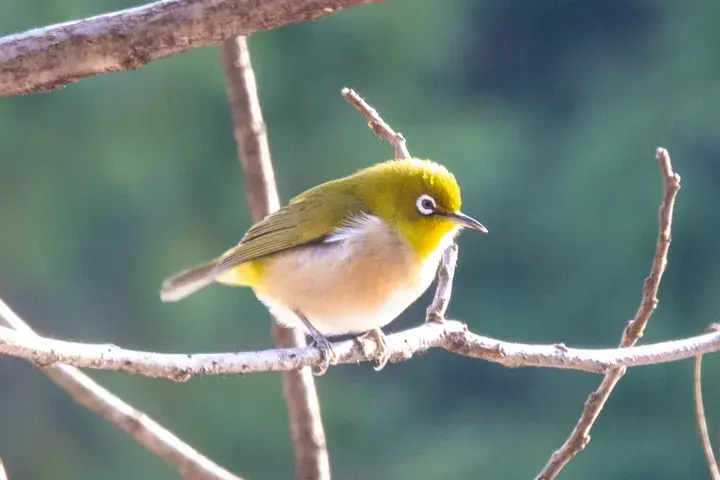
Adults: Olive-green with a white eye-ring and yellow throat.
Size: 4.3 in (10.5 cm)
On camera
Getting the warbling white-eye on a feeder camera
You need a hummingbird feeder camera – hummingbirds never visit seed feeders. See feeder cameras compared for the nectar models.
Questions
Warbling White-eye: questions
What do warbling white-eyes eat?
At feeders, nectar, fruit.
Do warbling white-eyes migrate?
Year-round resident. Across the US it is reported in every month; its share of bird sightings is highest in December.
Where do warbling white-eyes live?
By share of all bird sightings, they are most common in Hawaii, California. They are rare or absent in Alabama, Alaska, Arizona, Arkansas, California, Colorado.