Bird guide · Spinus pinus
Pine Siskin
What the pine siskin eats, where it lives, when it comes to feeders and how to recognise it – with sightings from every US state.
- Season
- Irruptive migrant
- Size
- 4.7 in (12 cm)
- Eats
- nyjer, sunflower hearts
- Feeds
- tube
- Most common
- Wyoming, Montana, Idaho
Food
What do pine siskins eat?
At feeders, pine siskins take nyjer, sunflower hearts.
Comes to feeders in flocks with American Goldfinches.
Feeder that suits it
A tube or hopper feeder with sunflower seed or sunflower hearts.
Range
Where do pine siskins live?
Very erratic in winter; comes south in huge numbers in some years. By share of all bird sightings, pine siskins are most common in Wyoming (1.2%).
States where pine siskins are most common
- Wyoming1.2%
- Montana1.2%
- Idaho1.0%
- Washington0.9%
- New Mexico0.9%
- Alaska0.8%
- Utah0.7%
- Oregon0.7%
- Colorado0.7%
- North Dakota0.6%
Share of all bird sightings in each state that are pine siskins, 2019–2024.
Season
Does the pine siskin migrate?
Irruptive migrant. Across the US it is reported in every month; its share of bird sightings is highest in February.
Share of all bird sightings in the US that are pine siskins, by month.
Identification
How to identify the pine siskin
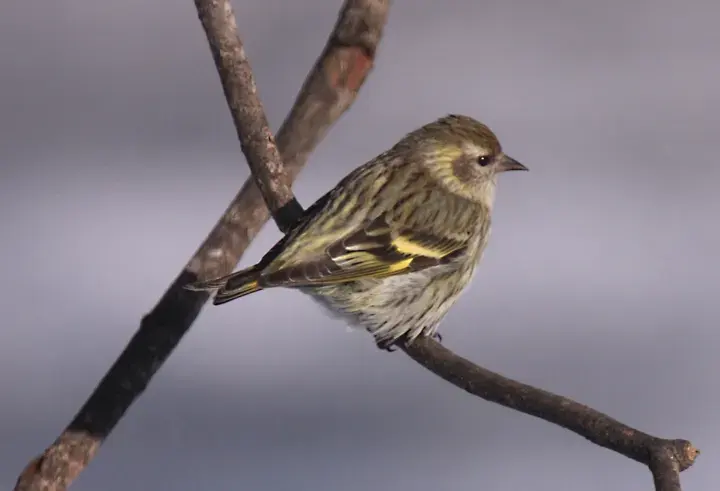
Adults: Brown with heavy streaking and yellow edging in the wings and tail.
Size: 4.7 in (12 cm)
On camera
Getting the pine siskin on a feeder camera
Any seed camera feeder works. Hang it near shrubs for cover, about five feet off the ground, with the lens facing away from direct sun.
Questions
Pine Siskin: questions
What do pine siskins eat?
At feeders, nyjer, sunflower hearts.
Do pine siskins migrate?
Irruptive migrant. Across the US it is reported in every month; its share of bird sightings is highest in February.
Where do pine siskins live?
By share of all bird sightings, they are most common in Wyoming, Montana, Idaho, Washington, New Mexico. They are rare or absent in Florida, Hawaii.