Bird guide · Dumetella carolinensis
Gray Catbird
What the gray catbird eats, where it lives, when it comes to feeders and how to recognise it – with sightings from every US state.
- Season
- Migrant; most winter in the southern US or tropics.
- Size
- 8.5 in (22.5 cm)
- Eats
- berries, mealworms
- Feeds
- tray/platform
- Most common
- Rhode Island, Pennsylvania, Connecticut
Food
What do gray catbirds eat?
At feeders, gray catbirds take berries, mealworms.
Hides in shrubbery, often flipping its long tail.
Feeder that suits it
A tray with chopped fruit, berries or mealworms.
Range
Where do gray catbirds live?
Dense shrubs and thickets; a few stay north in winter where berries or feeders exist. By share of all bird sightings, gray catbirds are most common in Rhode Island (1.9%).
States where gray catbirds are most common
- Rhode Island1.9%
- Pennsylvania1.8%
- Connecticut1.7%
- New York1.6%
- Massachusetts1.6%
- New Jersey1.5%
- Iowa1.4%
- Vermont1.4%
- New Hampshire1.4%
- Florida1.3%
Share of all bird sightings in each state that are gray catbirds, 2019–2024.
Season
Does the gray catbird migrate?
Migrant; most winter in the southern US or tropics.. Across the US it is reported in every month; its share of bird sightings is highest in May.
Share of all bird sightings in the US that are gray catbirds, by month.
Identification
How to identify the gray catbird
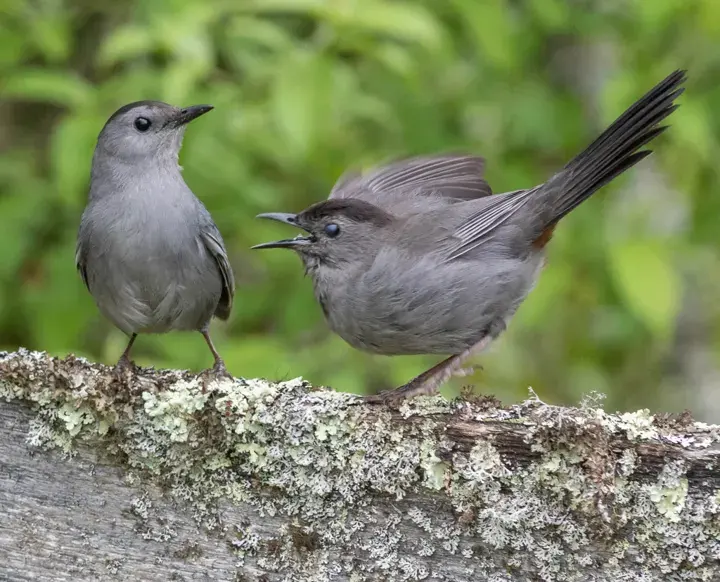
Adults: Smooth grey all over with a black cap and chestnut under the tail.
Size: 8.5 in (22.5 cm)
On camera
Getting the gray catbird on a feeder camera
Use a camera feeder with an open tray for fruit and mealworms; many fruit eaters ignore seed.
Questions
Gray Catbird: questions
What do gray catbirds eat?
At feeders, berries, mealworms.
Do gray catbirds migrate?
Migrant; most winter in the southern US or tropics.. Across the US it is reported in every month; its share of bird sightings is highest in May.
Where do gray catbirds live?
By share of all bird sightings, they are most common in Rhode Island, Pennsylvania, Connecticut, New York, Massachusetts. They are rare or absent in Alaska, Arizona, California, Hawaii, Nevada, Oregon.
More birds