Bird guide · Columba palumbus
Woodpigeon
What the woodpigeon eats, where it lives, when it comes to feeders and how to recognise it – with sightings from across the UK.
- Season
- Year-round resident; numbers boosted in winter by continental birds.
- Size
- 16.1 in (41 cm)
- Eats
- seeds, grain
- Feeds
- ground, tray/platform
- Most common
- England, Scotland, Wales
Food
What do woodpigeons eat?
At feeders, woodpigeons take seeds, grain.
Can be tame in towns; its wings clatter loudly when it flies off.
Feeder that suits it
A low tray or platform feeder, or seed scattered on the ground below your feeder.
Range
Where do woodpigeons live?
Fields, woods, parks and gardens across the country. By share of all bird sightings, woodpigeons are most common in England (3.6%).
Nations where woodpigeons are most common
- England3.6%
- Scotland3.2%
- Wales3.0%
- Northern Ireland2.8%
Share of all bird sightings in each nation that are woodpigeons, 2019–2024.
Season
Does the woodpigeon migrate?
Year-round resident; numbers boosted in winter by continental birds.. Across the UK it is reported in every month; its share of bird sightings is highest in July.
Share of all bird sightings in the UK that are woodpigeons, by month.
Identification
How to identify the woodpigeon
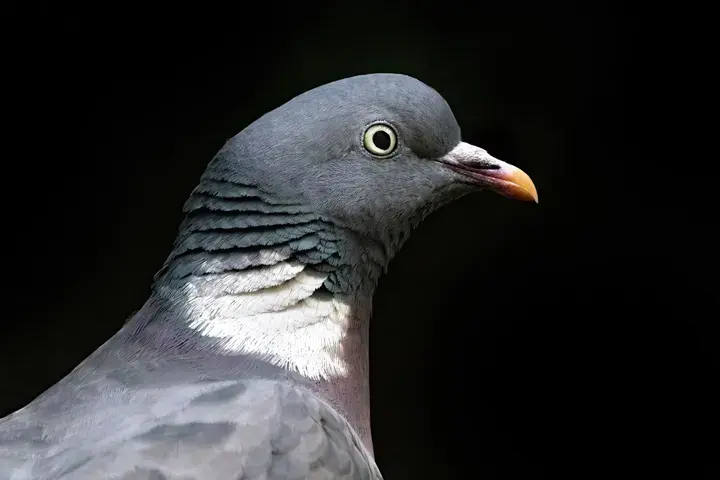
Adults: Largest UK pigeon: grey with a pink breast, white neck patch and thick white wing stripes in flight.
Young birds: No white neck patches; greyer bill.
Size: 16.1 in (41 cm)
On camera
Getting the woodpigeon on a feeder camera
Most visits happen on the ground or on low trays. A camera feeder with a wide tray, placed low near cover, catches far more than a hanging tube.
Questions
Woodpigeon: questions
What do woodpigeons eat?
At feeders, seeds, grain.
Do woodpigeons migrate?
Year-round resident; numbers boosted in winter by continental birds.. Across the UK it is reported in every month; its share of bird sightings is highest in July.
Where do woodpigeons live?
By share of all bird sightings, they are most common in England, Scotland, Wales, Northern Ireland.
More birds