Bird guide · Motacilla alba
Pied Wagtail
What the pied wagtail eats, where it lives, when it comes to feeders and how to recognise it – with sightings from across the UK.
- Season
- Partial migrant
- Size
- 7.1 in (18 cm)
- Eats
- mealworms, crumbs
- Feeds
- ground
- Most common
- Northern Ireland, Wales, Scotland
Food
What do pied wagtails eat?
At feeders, pied wagtails take mealworms, crumbs.
Dashes about over lawns and car parks picking up food rather than perching on feeders.
Feeder that suits it
A low tray or platform feeder, or seed scattered on the ground below your feeder.
Range
Where do pied wagtails live?
Pied Wagtail, common on lawns and car parks; US: scarce summer resident of western Alaska only. By share of all bird sightings, pied wagtails are most common in Northern Ireland (1.9%).
Nations where pied wagtails are most common
- Northern Ireland1.9%
- Wales1.4%
- Scotland1.3%
- England1.2%
Share of all bird sightings in each nation that are pied wagtails, 2019–2024.
Season
Does the pied wagtail migrate?
Partial migrant. Across the UK it is reported in every month; its share of bird sightings is highest in October.
Share of all bird sightings in the UK that are pied wagtails, by month.
Identification
How to identify the pied wagtail
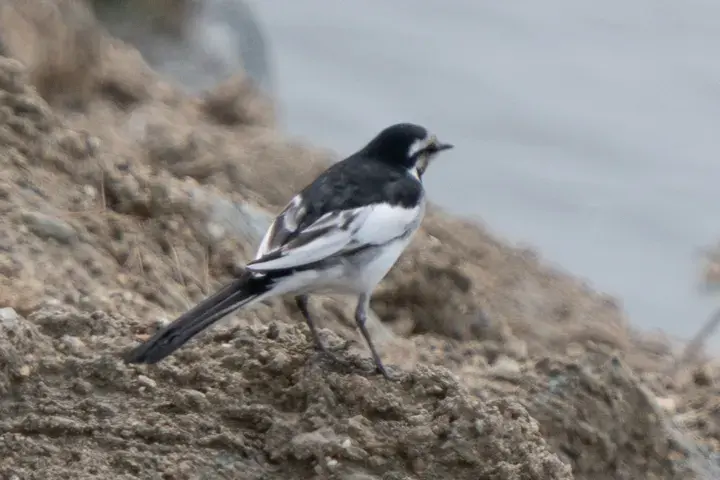
Adults: Black and white with a black bib, white face and a long tail it wags constantly.
Young birds: Immatures have a mostly white throat.
Size: 7.1 in (18 cm)
On camera
Getting the pied wagtail on a feeder camera
Most visits happen on the ground or on low trays. A camera feeder with a wide tray, placed low near cover, catches far more than a hanging tube.
Questions
Pied Wagtail: questions
What do pied wagtails eat?
At feeders, mealworms, crumbs.
Do pied wagtails migrate?
Partial migrant. Across the UK it is reported in every month; its share of bird sightings is highest in October.
Where do pied wagtails live?
By share of all bird sightings, they are most common in Northern Ireland, Wales, Scotland, England.
More birds