Bird guide · Aegithalos caudatus
Long-tailed Tit
What the long-tailed tit eats, where it lives, when it comes to feeders and how to recognise it – with sightings from across the UK.
- Season
- Year-round resident
- Size
- 5.5 in (14 cm)
- Eats
- fat balls, suet
- Most common
- England, Wales, Northern Ireland
Food
What do long-tailed tits eat?
At feeders, long-tailed tits take fat balls, suet.
Usually arrives in small, excitable flocks of about 20 birds.
Feeder that suits it
A suet cage on a tree trunk or pole; peanuts and sunflower hearts work too.
Range
Where do long-tailed tits live?
Across the country except the far north and west of Scotland, in woodland, hedgerows, parks and gardens. By share of all bird sightings, long-tailed tits are most common in England (1.2%).
Nations where long-tailed tits are most common
- England1.2%
- Wales0.9%
- Northern Ireland0.6%
- Scotland0.5%
Share of all bird sightings in each nation that are long-tailed tits, 2019–2024.
Season
Does the long-tailed tit migrate?
Year-round resident. Across the UK it is reported in every month; its share of bird sightings is highest in February.
Share of all bird sightings in the UK that are long-tailed tits, by month.
Identification
How to identify the long-tailed tit
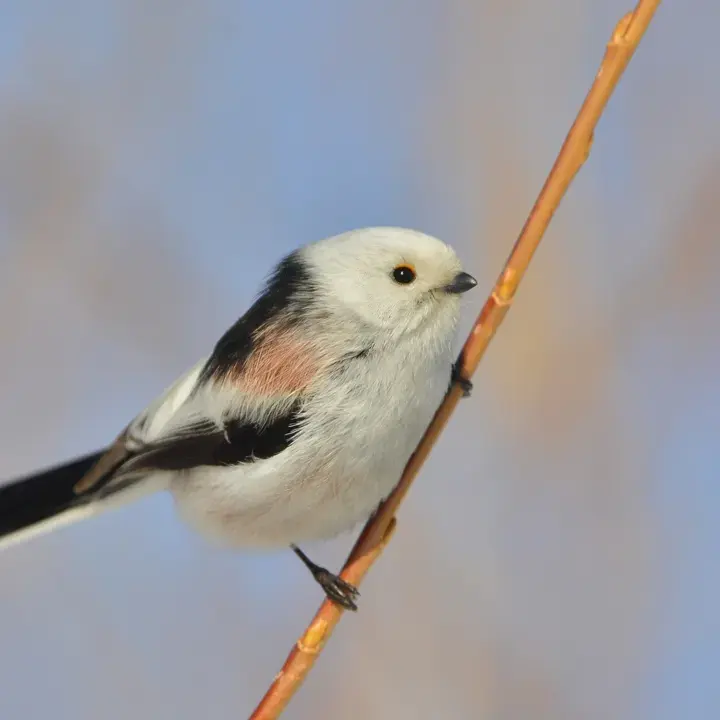
Adults: Pink ('blush'), black and white plumage with a tail longer than its body.
Size: 5.5 in (14 cm)
On camera
Getting the long-tailed tit on a feeder camera
Pick a camera feeder that takes a suet cage, or mount a separate camera next to a suet feeder on the trunk – woodpeckers cling to the bark while they feed.
Questions
Long-tailed Tit: questions
What do long-tailed tits eat?
At feeders, fat balls, suet.
Do long-tailed tits migrate?
Year-round resident. Across the UK it is reported in every month; its share of bird sightings is highest in February.
Where do long-tailed tits live?
By share of all bird sightings, they are most common in England, Wales, Northern Ireland, Scotland.