Bird guide · Fringilla montifringilla
Brambling
What the brambling eats, where it lives, when it comes to feeders and how to recognise it – with sightings from across the UK.
- Season
- Winter visitor to the UK
- Size
- 5.5 in (14 cm)
- Most common
- England, Scotland, Northern Ireland
Food
What do bramblings eat?
Joins flocks of Chaffinches and other finches.
Feeder that suits it
A tube or hopper feeder with sunflower seed or sunflower hearts.
Range
Where do bramblings live?
Winter visitor to beech woods, farmland and gardens; numbers vary with food supply. By share of all bird sightings, bramblings are most common in England (0.1%).
Nations where bramblings are most common
- England0.06%
- Scotland0.06%
- Northern Ireland0.05%
- Wales0.03%
Share of all bird sightings in each nation that are bramblings, 2019–2024.
Season
When can you see the brambling?
Winter visitor to the UK. Across the UK, it is mainly reported from September to April, most often in October.
Share of all bird sightings in the UK that are bramblings, by month.
Identification
How to identify the brambling
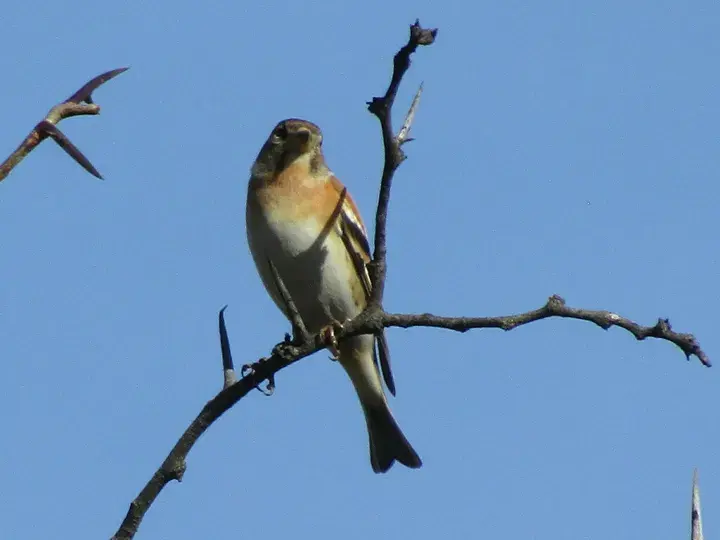
Male: Orange breast, white belly and white rump; black head in summer.
Female: Less distinct, more like a Chaffinch.
Size: 5.5 in (14 cm)
Easily confused with
- Chaffinch – no white rump; pinkish breast in males
On camera
Getting the brambling on a feeder camera
Any seed camera feeder works. Hang it near shrubs for cover, about five feet off the ground, with the lens facing away from direct sun.
Questions
Brambling: questions
Do bramblings migrate?
Winter visitor to the UK. Across the UK, it is mainly reported from September to April, most often in October.
Where do bramblings live?
By share of all bird sightings, they are most common in England, Scotland, Northern Ireland, Wales.
What does a female brambling look like?
Less distinct, more like a Chaffinch.