Bird guide · Cyanistes caeruleus
Blue Tit
What the blue tit eats, where it lives, when it comes to feeders and how to recognise it – with sightings from across the UK.
- Season
- Year-round resident
- Size
- 4.7 in (12 cm)
- Eats
- sunflower seeds, peanuts, suet
- Feeds
- tube, suet cage
- Most common
- England, Wales, Northern Ireland
Food
What do blue tits eat?
At feeders, blue tits take sunflower seeds, peanuts, suet, mealworms.
Clings confidently to feeders, often after other birds have flown.
Feeder that suits it
A tube or hopper feeder with sunflower seed or sunflower hearts.
Range
Where do blue tits live?
Common in woodland, hedgerows, parks and gardens across the country except some Scottish islands. By share of all bird sightings, blue tits are most common in England (2.7%).
Nations where blue tits are most common
- England2.7%
- Wales2.5%
- Northern Ireland2.2%
- Scotland2.1%
Share of all bird sightings in each nation that are blue tits, 2019–2024.
Season
Does the blue tit migrate?
Year-round resident. Across the UK it is reported in every month; its share of bird sightings is highest in January.
Share of all bird sightings in the UK that are blue tits, by month.
Identification
How to identify the blue tit
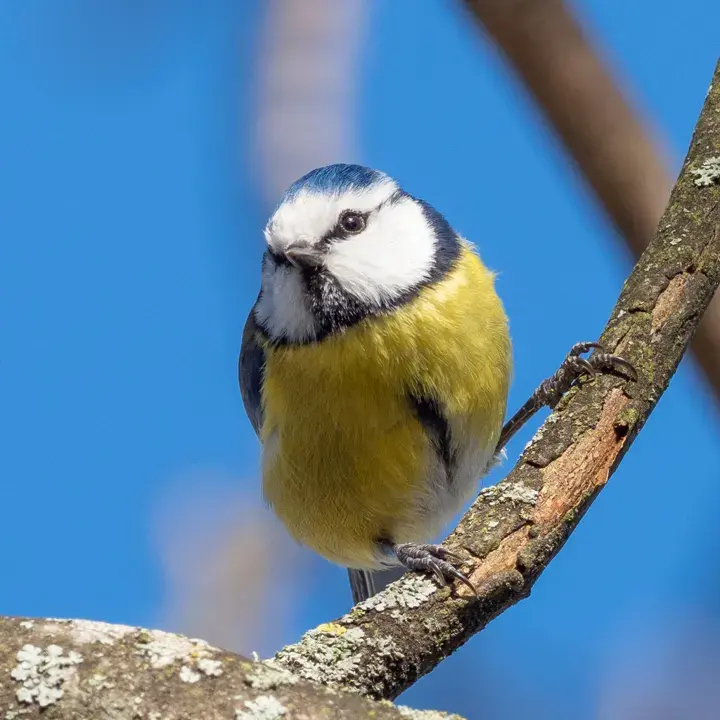
Adults: Yellowish chest, green-blue cap and wings, white face with a black eye stripe.
Size: 4.7 in (12 cm)
Nesting
Does the blue tit use nest boxes?
Yes. Entrance hole 25 mm (BTO).
On camera
Getting the blue tit on a feeder camera
Any seed camera feeder works. Hang it near shrubs for cover, about five feet off the ground, with the lens facing away from direct sun.
Questions
Blue Tit: questions
What do blue tits eat?
At feeders, sunflower seeds, peanuts, suet, mealworms.
Do blue tits migrate?
Year-round resident. Across the UK it is reported in every month; its share of bird sightings is highest in January.
Where do blue tits live?
By share of all bird sightings, they are most common in England, Wales, Northern Ireland, Scotland.