Bird guide · Sylvia atricapilla
Blackcap
What the blackcap eats, where it lives, when it comes to feeders and how to recognise it – with sightings from across the UK.
- Season
- Migrant
- Size
- 5.1 in (13 cm)
- Eats
- suet, fruit
- Feeds
- suet cage, tray/platform
- Most common
- England, Wales, Northern Ireland
Food
What do blackcaps eat?
At feeders, blackcaps take suet, fruit.
Visits garden feeding stations in winter.
Feeder that suits it
A tray with chopped fruit, berries or mealworms.
Range
Where do blackcaps live?
Breeds widely; summer birds leave in autumn and are replaced by Blackcaps from central Europe in winter. By share of all bird sightings, blackcaps are most common in England (0.9%).
Nations where blackcaps are most common
- England0.9%
- Wales0.8%
- Northern Ireland0.7%
- Scotland0.4%
Share of all bird sightings in each nation that are blackcaps, 2019–2024.
Season
When can you see the blackcap?
Migrant. Across the UK, sightings start in January, peak in May and fade out in October.
Share of all bird sightings in the UK that are blackcaps, by month.
Identification
How to identify the blackcap
Male: Greyish warbler with a black cap.
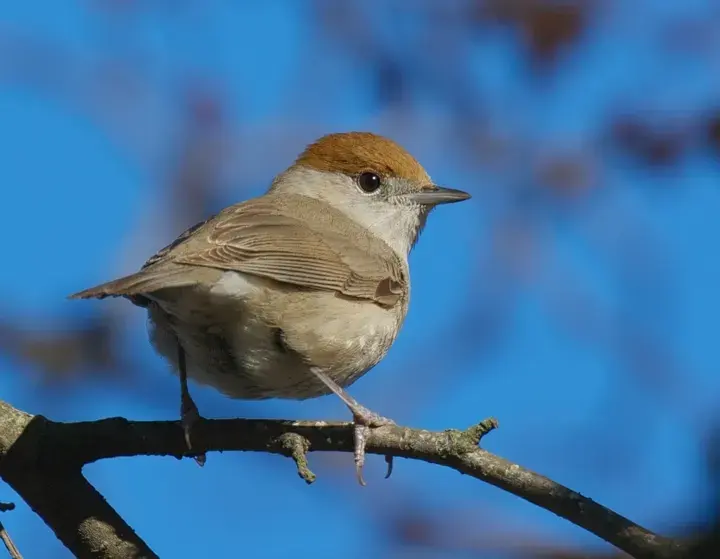
Female: Chestnut-brown cap.
Young birds: Brown cap, like female.
Size: 5.1 in (13 cm)
On camera
Getting the blackcap on a feeder camera
Use a camera feeder with an open tray for fruit and mealworms; many fruit eaters ignore seed.
Questions
Blackcap: questions
What do blackcaps eat?
At feeders, suet, fruit.
Do blackcaps migrate?
Migrant. Across the UK, sightings start in January, peak in May and fade out in October.
Where do blackcaps live?
By share of all bird sightings, they are most common in England, Wales, Northern Ireland, Scotland.
What does a female blackcap look like?
Chestnut-brown cap.